Notice the detail
Learn to recognise contact, movement and muscular effort. Compare how you feel before and after a practice, without needing to produce a particular result.
Learn to recognise habitual tension, explore more comfortable movement and build a practical relationship with your body. A gentle introduction to somatic practice, taught by Maya.

Perhaps your shoulders tense at the computer, sitting feels effortful, or you only notice your body when it asks you to stop. These lessons turn those familiar experiences into something you can observe and work with.
Learn to recognise contact, movement and muscular effort. Compare how you feel before and after a practice, without needing to produce a particular result.
Explore small movements in sitting, standing and supported rest. Adjust the range, pace and position to find a way of moving that feels comfortable.
Bring that awareness to reaching, turning, working and walking. Build a short practice you can return to between appointments or as part of your week.
Each module pairs a short explanation with a guided practice and a reflection prompt. Work through them in order, then revisit the practices that are useful to you.
Recognise the difference between contact, effort and comfort. Establish a simple way to check how you feel before and after a practice.
The explorationExplore the support of a chair and the contact of your feet with the floor.
A question to take with youWhere do I notice support, and where am I doing more work than I need to?
Explore this sample lessonObserve your breathing without forcing it. Explore how a comfortable position and small movements of the ribs relate to the way you breathe.
The explorationCompare breathing in a supported sitting position with breathing while resting.
A question to take with youWhat changes when I stop trying to take a bigger breath?
Notice familiar holding around the shoulders and jaw. Use small, unhurried movements to explore the relationship between the arms, shoulders and head.
The explorationTry an easy reaching movement and notice how much of the body joins in.
A question to take with youCan a smaller movement feel easier or clearer?
Explore how the pelvis, spine and ribs contribute to sitting and turning. Compare movement options rather than trying to achieve a perfect posture.
The explorationNotice the relationship between a small turn, the ribs and the weight on the chair.
A question to take with youWhat happens when I share a movement across more of my body?
Bring attention to the contact beneath your feet and the way weight shifts as you stand or walk. Use a chair or wall for support whenever helpful.
The explorationExplore the preparation for standing, with support and an easy range of movement.
A question to take with youWhere do I feel steadiness, and where could I use more support?
Bring together the explorations that felt useful. Build a short routine around the things you actually do, from desk work to walking and winding down.
The explorationCombine a body check-in with two familiar movements and a pause to compare.
A question to take with youWhat could I realistically return to during an ordinary week?
A look inside Module 1: a video lesson, reading, guided practice and time to reflect, all in one welcoming place.
Your choice of course languages · Optional paid extra. English and German illustrate this feature; your website can offer the languages you and your learners need.
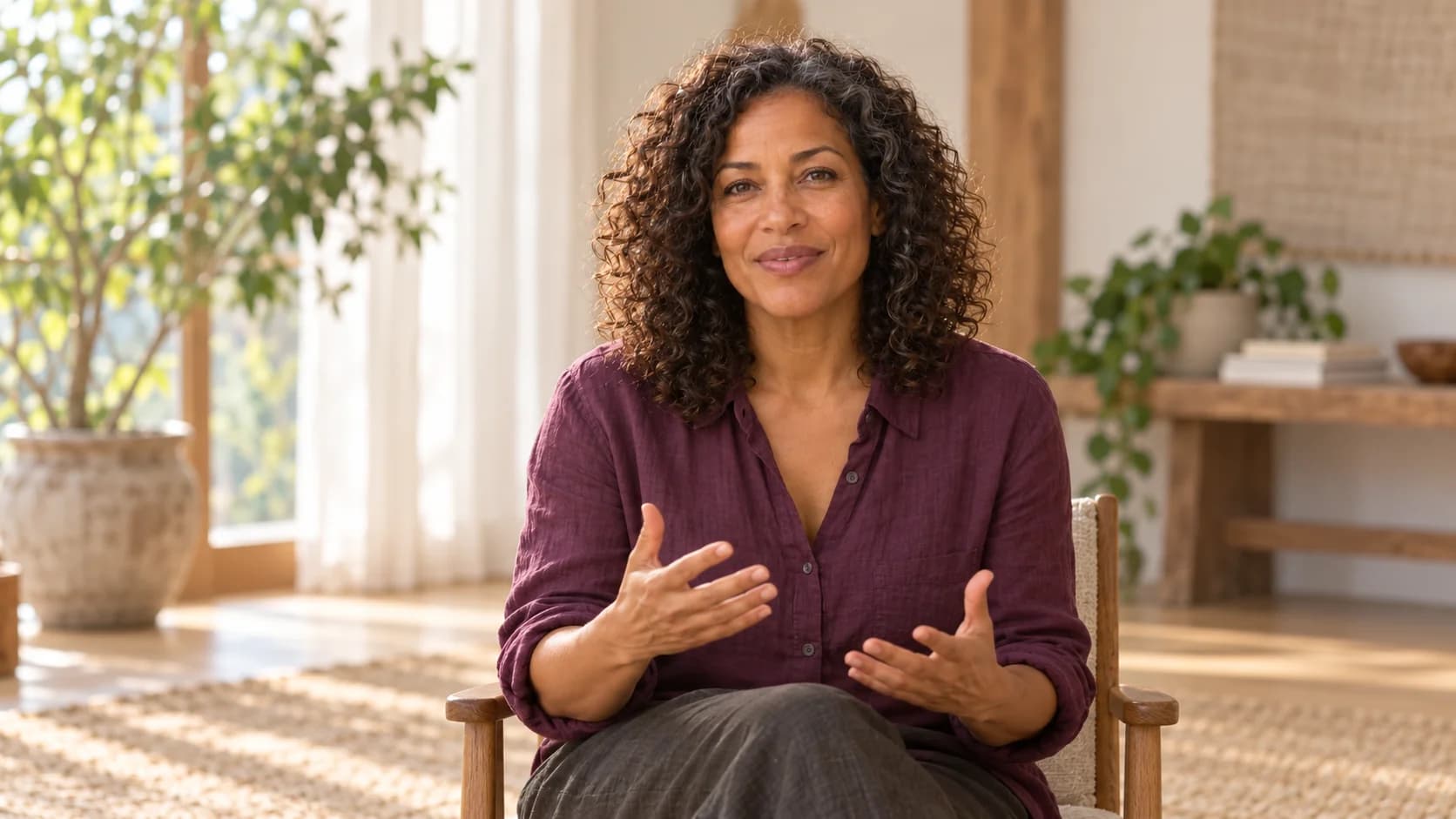
Begin with a little curiosity. Notice the support beneath you, then explore the reading and guided practice below at your own pace.
Before changing how you move, notice what is supporting you. Feel the contact of the chair, the floor beneath your feet and the movement of an ordinary breath. You do not need to produce a particular feeling. Begin with what you can notice, without judging it.
Sit in a supported position with your feet on the floor. Notice the contact beneath your feet, seat and hands. Try one small, comfortable movement, then pause and compare what you feel.
What did you notice when you stopped trying to make the moment different?
A place for your discoveries, questions and words you want to return to.
This example keeps notes in this browser tab only. They disappear when the tab is closed. Please use sample text.
Explore what stayed with you. Single-choice, multiple-choice and true/false questions are marked automatically, with immediate results. Your teacher does not need to mark them by hand.
Short and long written answers need teacher review, rather than automatic marking. Teacher feedback can be included in the agreed course service. These example reflections stay on this page.
Keep a question and its reply beside the lesson that prompted it. Message translation can be set up in your chosen languages; German is shown here as one example.
A quiet corner, comfortable clothing and a stable chair are enough for the seated explorations. For practices in lying, have a mat or comfortable firm surface and a cushion nearby.
Set aside 10–20 minutes. Repeat a familiar practice before adding another, and use the reflection prompts to recognise what is useful in your everyday life.
Ask about the course
My approach brings together hands-on bodywork, guided movement and attention to how people feel. This course carries the movement and awareness part of that work into a practice you can explore at home.
I explain what we are exploring, offer options and leave time to notice. The aim is a useful understanding of your body that goes beyond following instructions.
More about MayaThis online course page and lesson layout demonstrate an optional paid website additional feature, separate from the core website package.
Choose your course, add your details and continue to secure payment. Make a little room for something that matters to you.